
Digital X-Rays
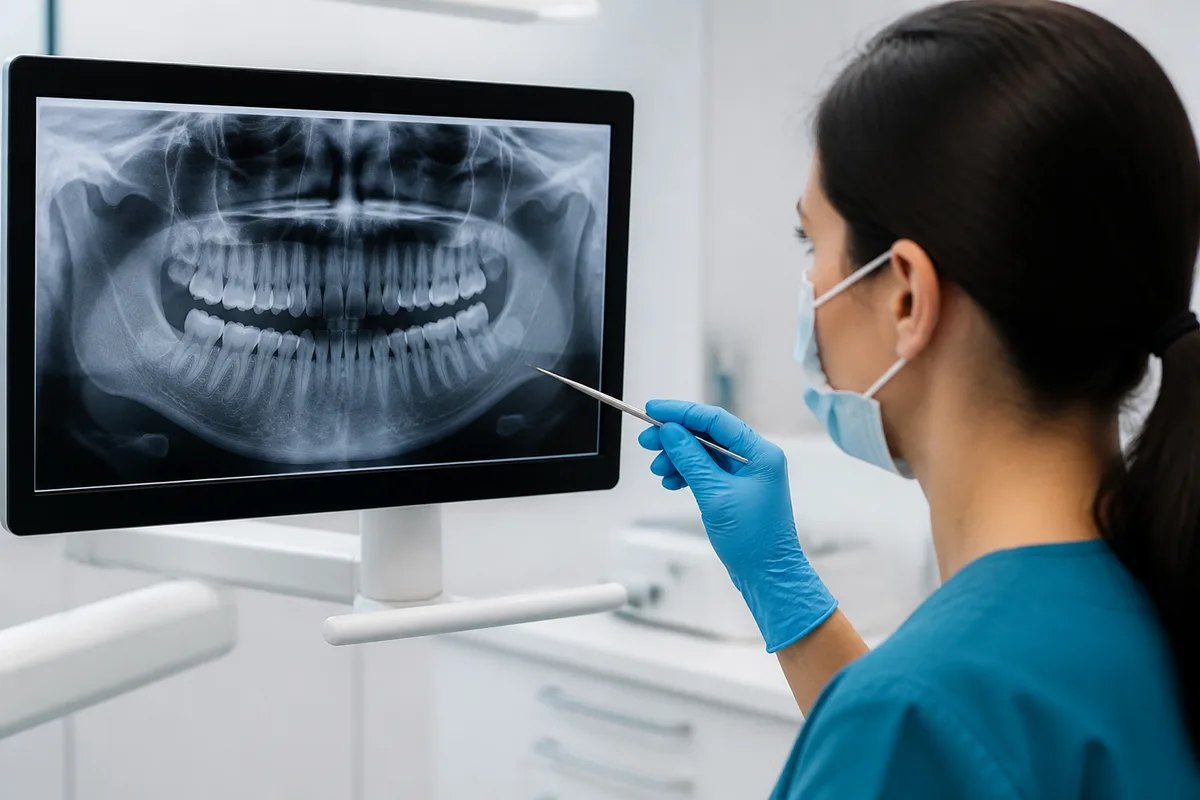
Digital X-Rays
Digital X-Rays are a routine part of modern dental care, helping dentists see what isn't visible during a regular exam. At Salm Dental in Anytown, CA, this imaging is used as one part of a broader approach to general and preventive dentistry, giving both patient and dentist a clearer picture of what's happening beneath the surface.
What digital X-Rays is
Digital radiography is a way of capturing images of the teeth, roots, and jawbone using electronic sensors instead of traditional film. A small sensor is placed in or near the mouth, a brief burst of X-ray energy passes through the tissue, and the resulting image appears almost instantly on a computer screen.
This technology replaced older film-based X-rays, which required chemical developing and a longer wait before the dentist could review results. Because digital sensors are more sensitive, they typically require less radiation to produce a usable image, and the pictures can be enlarged, adjusted, and stored electronically for easy reference at future visits.
How we use it at Salm Dental
Digital radiography at Salm Dental supports the everyday work of general dentistry and preventive care — helping to check for issues like decay between teeth, bone changes, or problems below the gumline that aren't visible to the eye alone. Because the images appear quickly, they can be reviewed with patients during the same visit, making it easier to talk through what the dentist is seeing and why a particular treatment approach is recommended.
This imaging also fits naturally alongside other services offered at the practice, including cosmetic, restorative, and implant dentistry, where a clear view of the tooth structure and surrounding bone is an important part of planning care. In each case, digital X-rays serve as a supporting tool — one piece of a fuller picture that also includes a visual exam and a conversation about your dental history and goals.
What it means for you
For patients, digital imaging generally means less waiting and less radiation exposure compared to older film methods. Because the images are ready right away, there's typically no need for a separate appointment just to review results — your dentist can walk you through the findings during the same visit.
The digital format also makes it easier to spot small issues early, before they become larger and more involved to treat. Images can be zoomed in, compared side by side, and saved for future reference, which supports clearer communication between you and your dental team over time.
What to expect during your visit
If digital X-rays are part of your appointment, the process is quick and straightforward. A small sensor, sometimes with a protective covering, is positioned inside your mouth or held in place by a bite tab. You may be asked to bite down gently or hold still for a few seconds while the image is captured.
Most patients feel little to nothing during the process — there's no discomfort from the sensor itself, though it may feel slightly bulky for a moment. A full set of images typically takes just a few minutes, and results appear on screen almost immediately, allowing your dentist to review them with you before moving forward with any recommendations.
No special preparation is needed beforehand. Afterward, you can go about your day as usual — imaging like this doesn't require any recovery time.
Frequently asked questions
Is digital X-ray radiation safe?
Digital radiography generally uses lower radiation levels than older film-based X-rays, and dental imaging as a whole involves a very small dose. Protective measures, such as lead aprons or thyroid collars, may also be used depending on the type of image being taken. Your dentist can explain the specifics of any imaging recommended for you.
Will it be uncomfortable?
Most patients don't find digital X-rays uncomfortable. The sensor may feel slightly firm or bulky for the few seconds it's in place, but there's no pain involved, and the process is over quickly.
How often are dental X-rays needed?
How often X-rays are taken depends on your individual dental health, history, and any specific concerns your dentist wants to monitor. Some patients need them more frequently than others, and your dentist will recommend a schedule that fits your situation.
Who is digital X-ray imaging suitable for?
Digital X-rays are commonly used across a wide range of patients as part of routine dental exams and treatment planning. Your dentist will take your health history and any specific needs into account when deciding what imaging, if any, is appropriate for you.
If you'd like to learn more about digital X-rays or see how they might fit into your next visit, reach out to Salm Dental — we're happy to answer your questions.